Species comparison
Bobcat vs Eurasian Lynx
A side-by-side look at Lynx rufus and Lynx lynx across body measurements, habitat, diet, behaviour and conservation status.
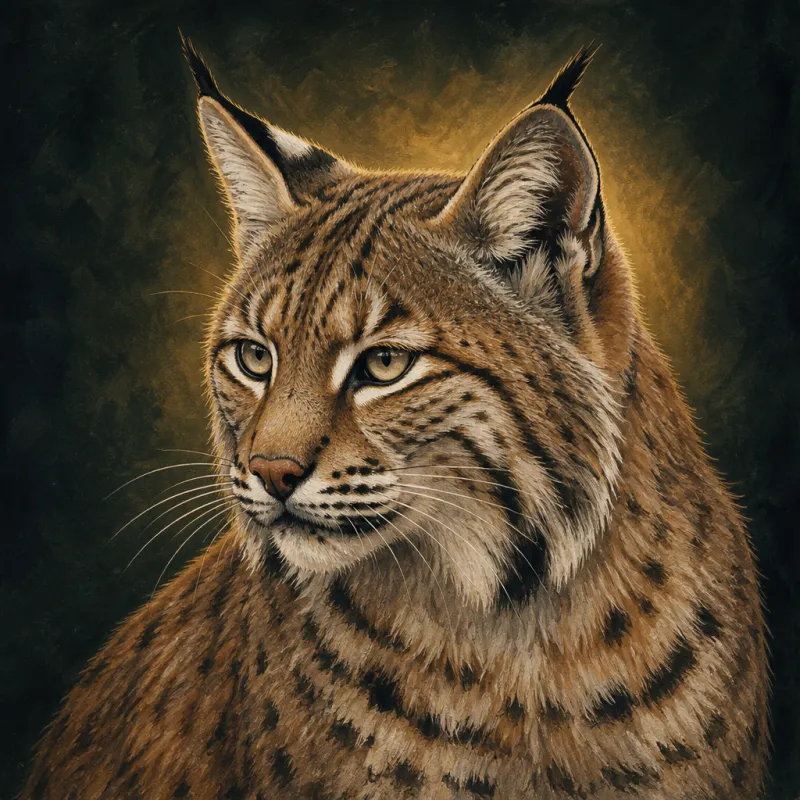
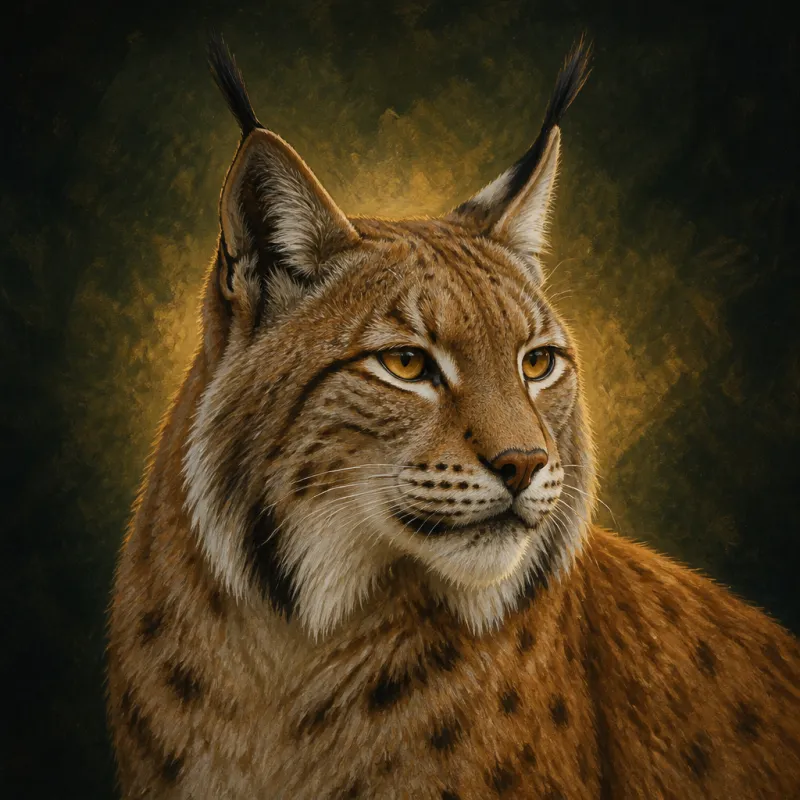
At a glance
- The eurasian lynx averages about 2 times the body mass of the bobcat.
- Both species use temperate forest and montane forest.
- Their ranges do not overlap: Bobcat lives in North America, Eurasian Lynx in Europe and Asia.
- Both are currently listed as Least Concern on the Red List.
Identification
How each species is named and classified.
Bobcat
Lynx rufus
Eurasian Lynx
Lynx lynx
Bobcat
Lynx
Eurasian Lynx
Lynx
Bobcat
Lynx lineage
Eurasian Lynx
Lynx lineage
Bobcat
Medium-sized cats
Eurasian Lynx
Medium-sized cats
Bobcat
Bay lynx, Wildcat
Eurasian Lynx
Northern lynx, Siberian lynx
Body and movement
Published field measurements for adults. Ranges cover both sexes unless noted.
Bobcat
19 in – 4 ft 1 in (47–125 cm)
Eurasian Lynx
2 ft 6 in – 4 ft 3 in (76–130 cm) Longer
Bobcat
4 in – 8 in (9–20 cm)
Eurasian Lynx
4 in – 10 in (11–25 cm) Longer
Bobcat
12 in – 24 in (30–60 cm)
Eurasian Lynx
24 in – 2 ft 6 in (60–75 cm) Taller
Bobcat
8.8–40 lb (4–18 kg)
Typical males 7–14 kg; northern animals are consistently larger than southern ones.
Eurasian Lynx
29–66 lb (13–30 kg) Heavier
Siberian animals are the largest; a few males exceed 30 kg.
Bobcat
30 mph (48 km/h)
Short bursts; bobcats are stalkers rather than pursuers.
Eurasian Lynx
Not reliably measured
Not reliably measured; the species hunts by stalking, not pursuit.
Life span
Typical adult longevity. Figures for managed care come from zoo and sanctuary records.
Bobcat
7–12 years
Eurasian Lynx
10–17 years Longer
Bobcat
20–25 years Longer
Eurasian Lynx
20–24 years
Habitat and range
Where each species lives and the conditions it tolerates.
Bobcat
temperate forest, semi-arid scrub, desert, wetland, agricultural mosaic, montane forest
Almost anything with cover: chaparral, hardwood and conifer forest, swamp, desert canyon, sagebrush and the wooded margins of towns and cities.
Eurasian Lynx
temperate forest, boreal forest, montane forest, rocky alpine
Forested landscapes with dense understorey and low human disturbance, from lowland woodland to alpine forest edge above 12,000 feet in Central Asia.
Bobcat
North America
From southern Canada through most of the contiguous United States to central Mexico, with the highest densities in the south-east and south-west.
Eurasian Lynx
Europe, Asia
Scandinavia, the Baltic states, the Carpathians, the Balkans, the Alps, and across Russia, the Caucasus, Central Asia, Mongolia, China and the Himalaya.
Diet and behaviour
Feeding ecology, social organisation and hunting technique.
Bobcat
hares, small mammals, birds, reptiles, medium ungulates
Cottontail rabbits and rodents form the core; bobcats also take birds, lizards and, in northern winters, deer weakened by snow.
Eurasian Lynx
medium ungulates, hares, small mammals, birds
Roe deer and chamois dominate in Europe; hares, marmots, musk deer and gamebirds are more important in Asia.
Bobcat
Solitary and territorial
Males hold ranges overlapping several females, marking with scrapes, urine and faeces at trail junctions.
Eurasian Lynx
Solitary and territorial
Home ranges are very large, and males overlap several females. Adults are exceptionally difficult to observe even where they are common.
Bobcat
Crepuscular
Activity peaks around dawn and dusk, extending into the night near human settlement.
Eurasian Lynx
Nocturnal and crepuscular
Chiefly active from dusk to dawn, resting by day in rock crevices, root plates or dense thickets.
Bobcat
Stalk and pounce
A bobcat freezes, creeps to within a few feet, then covers the last distance in one or two bounds.
Eurasian Lynx
Patient stalk followed by a short charge
The lynx tracks or waits near deer trails and closes to within a few bounds before attacking the throat; large kills are cached and revisited.
Bobcat
Strong
Climbs easily, resting on branches and using trees to escape dogs and coyotes.
Eurasian Lynx
Strong
A confident climber that uses trees for resting and for escape from wolves.
Bobcat
Capable
Will swim across streams and swamp channels, notably in the south-eastern United States.
Eurasian Lynx
Capable
Crosses rivers when necessary but shows no preference for water.
Conservation
Red List category, population direction and the pressures documented for each species.
Bobcat
LC — Least Concern
Assessed 2016
Eurasian Lynx
LC — Least Concern
Assessed 2015
Bobcat
Stable
Eurasian Lynx
Stable
Bobcat
Vehicle collisions, Anticoagulant rodenticide exposure, Habitat fragmentation near cities, Regulated and illegal harvest pressure, Disease in isolated urban populations
Numbers are healthy across most of the range and the species has recolonised parts of the Midwest. Local concerns include rodenticide exposure in urban populations and mange outbreaks.
Eurasian Lynx
Illegal killing, Habitat fragmentation by infrastructure, Prey depletion in parts of Asia, Conflict with livestock and game interests, Isolation of reintroduced nuclei
Widespread and recovering in parts of Europe thanks to reintroduction and legal protection, but the Balkan lynx survives as a tiny isolated population and remains critically threatened.
Notable traits
Details that do not fit neatly into a measurement table.
Bobcat
- It is the most numerous wild cat in North America and the one most often photographed by home security cameras.
- Coat pattern varies from heavily spotted in the south-west to almost plain in northern forests.
- Urban bobcats in southern California have been studied for years as an indicator of how carnivores cope with fragmented landscapes.
Eurasian Lynx
- Reintroduction projects re-established the species in Switzerland, Slovenia, Austria and France after regional extinction.
- It is the only lynx for which deer form the main prey base across much of the range.
- Winter tracking in snow remains one of the standard monitoring methods across northern Europe.
Sources used for this comparison
- IUCN Red List of Threatened Species Global assessment categories, population trends and documented threats.
- IUCN SSC Cat Specialist Group Species accounts, distribution notes and Cat News reporting for every wild felid.
- U.S. National Park Service Long-running monitoring of North American carnivores inside protected areas.
- U.S. Fish and Wildlife Service Federal listing status and recovery planning for cats occurring in the United States.
- Animal Diversity Web, University of Michigan Museum of Zoology Reviewed species accounts with morphometric ranges and reproductive data.
- World Wildlife Fund Range descriptions, threat summaries and conservation programme reporting.
- National Geographic — Animals General natural-history reference for behaviour, range and ecology.