Species comparison
Pampas Cat vs Andean Mountain Cat
A side-by-side look at Leopardus colocola and Leopardus jacobita across body measurements, habitat, diet, behaviour and conservation status.
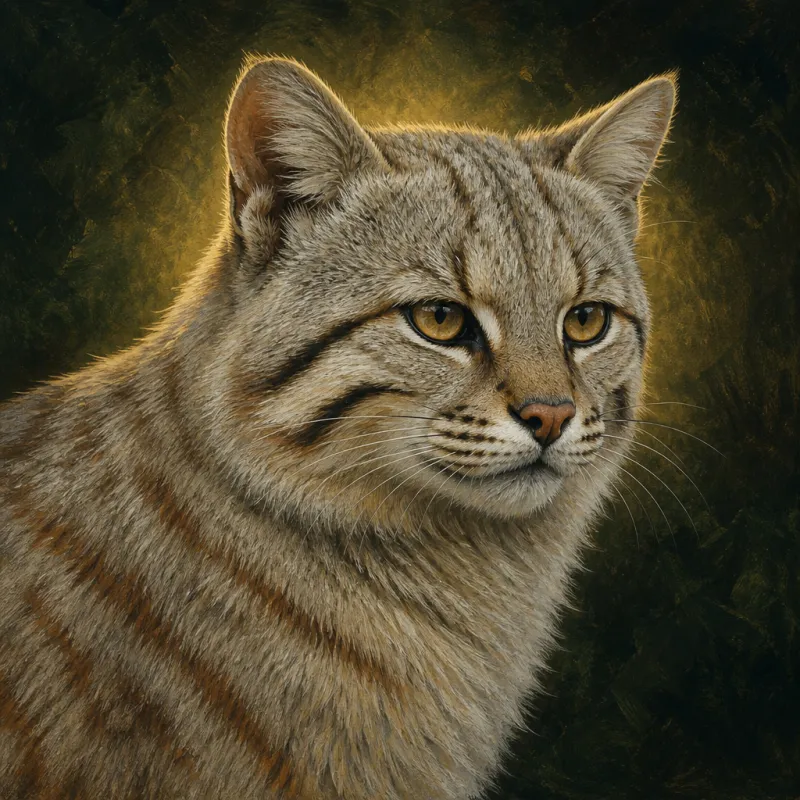
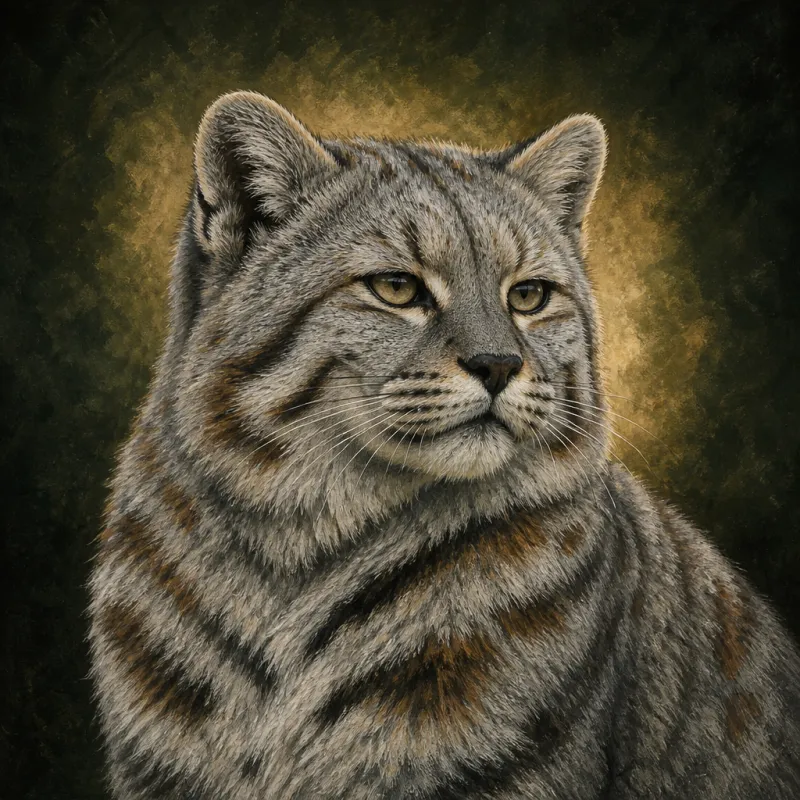
At a glance
- The andean mountain cat averages about 1.6 times the body mass of the pampas cat.
- Both species use steppe and rocky alpine.
- Their ranges both include South America.
- Red List categories differ: Pampas Cat is listed as Near Threatened, Andean Mountain Cat as Endangered.
Identification
How each species is named and classified.
Pampas Cat
Leopardus colocola
Andean Mountain Cat
Leopardus jacobita
Pampas Cat
Leopardus
Andean Mountain Cat
Leopardus
Pampas Cat
Ocelot lineage
Andean Mountain Cat
Ocelot lineage
Pampas Cat
Small cats
Andean Mountain Cat
Small cats
Pampas Cat
Colocolo, Gato de los pajonales
Andean Mountain Cat
Andean cat, Gato andino
Body and movement
Published field measurements for adults. Ranges cover both sexes unless noted.
Pampas Cat
17 in – 2 ft 7 in (42–79 cm)
Andean Mountain Cat
22 in – 2 ft 9 in (57–85 cm) Longer
Pampas Cat
9 in – 13 in (22–33 cm)
Andean Mountain Cat
16 in – 19 in (41–48 cm) Longer
Pampas Cat
12 in – 14 in (30–35 cm)
Andean Mountain Cat
13 in – 15 in (33–38 cm) Taller
Pampas Cat
4.4–8.8 lb (2–4 kg)
High-altitude animals tend to be larger and longer-coated.
Andean Mountain Cat
8.8–12 lb (4–5.5 kg) Heavier
Very few animals have ever been weighed.
Pampas Cat
Not reliably measured
Not measured in the field.
Andean Mountain Cat
Not reliably measured
No field measurement exists.
Life span
Typical adult longevity. Figures for managed care come from zoo and sanctuary records.
Pampas Cat
9–12 years
Andean Mountain Cat
10–12 years Longer
Pampas Cat
12–16 years Longer
Andean Mountain Cat
12–15 years
Habitat and range
Where each species lives and the conditions it tolerates.
Pampas Cat
grassland, steppe, semi-arid scrub, dry forest, rocky alpine
Open habitats with cover at ground level: pampas grassland, Andean puna, Patagonian steppe, Chaco scrub and dry woodland.
Andean Mountain Cat
rocky alpine, steppe
Arid, rocky terrain above the treeline in the high Andes, and rocky steppe in northern Patagonia, generally between 10,000 and 16,000 feet.
Pampas Cat
South America
From Ecuador and Colombia south through Peru, Bolivia, Brazil, Paraguay, Uruguay, Chile and Argentina to Patagonia.
Andean Mountain Cat
South America
Southern Peru, western Bolivia, northern Chile and north-western Argentina, with a disjunct population in the Patagonian steppe.
Diet and behaviour
Feeding ecology, social organisation and hunting technique.
Pampas Cat
small mammals, birds, reptiles
Small rodents, ground-nesting birds and their eggs, lizards and occasional invertebrates.
Andean Mountain Cat
small mammals, birds, reptiles
Mountain viscachas dominate the diet, supplemented by chinchillas, tuco-tucos, birds and lizards.
Pampas Cat
Solitary
Poorly known; observations are scattered and there are very few radio-tracking studies.
Andean Mountain Cat
Solitary
Densities are extremely low, and individuals appear to range widely across rocky outcrops that hold viscacha colonies.
Pampas Cat
Nocturnal and crepuscular
Mostly active at night, with daytime records from high-altitude and cold environments.
Andean Mountain Cat
Crepuscular and nocturnal
Most records fall around twilight, with some daytime activity in cold, clear weather.
Pampas Cat
Ground search in tussock cover
Works methodically through grass and scrub, flushing and pouncing on rodents.
Andean Mountain Cat
Ambush around rock colonies
Hunts by waiting near viscacha colonies and rushing over broken rock.
Pampas Cat
Capable
Climbs when trees are available but is essentially terrestrial.
Andean Mountain Cat
Strong More developed
Highly capable on rock and scree; trees are absent from most of its range.
Pampas Cat
Very limited
No significant association with water.
Andean Mountain Cat
Very limited
No meaningful records; the habitat offers little standing water.
Conservation
Red List category, population direction and the pressures documented for each species.
Pampas Cat
NT — Near Threatened
Assessed 2020
Andean Mountain Cat
EN — Endangered
Assessed 2016
Pampas Cat
Decreasing
Andean Mountain Cat
Decreasing
Pampas Cat
Grassland conversion to agriculture, Persecution near poultry, Dogs in rural landscapes, Road mortality, Unresolved taxonomy hampering targeted action
Conversion of native grassland to crops and pasture is the main pressure, alongside heavy fragmentation in the pampas and Chaco.
Andean Mountain Cat
Decline of mountain viscacha populations, Killing for traditional and ceremonial use, Mining expansion in high-altitude basins, Habitat fragmentation, Dogs accompanying herders
Assessed as Endangered with a small and declining population. Its dependence on a single main prey species, itself hunted by people, makes the situation fragile.
Notable traits
Details that do not fit neatly into a measurement table.
Pampas Cat
- The coat can differ so much between populations that specimens were once split into several species.
- It occupies one of the widest altitude ranges of any American cat, from sea level to Andean puna.
- Field records remain so sparse that basic life-history data are still missing for many regions.
Andean Mountain Cat
- Fewer than 1,500 mature individuals are estimated to survive.
- Dried specimens appear in some Andean ceremonial traditions, which is a documented source of mortality.
- The tail can approach three-quarters of head-body length and is unusually thick and heavily ringed.
Sources used for this comparison
- IUCN Red List of Threatened Species Global assessment categories, population trends and documented threats.
- IUCN SSC Cat Specialist Group Species accounts, distribution notes and Cat News reporting for every wild felid.
- Small Wild Cat Conservation Foundation Dedicated research and field reporting on the lesser-known felids.
- Animal Diversity Web, University of Michigan Museum of Zoology Reviewed species accounts with morphometric ranges and reproductive data.
- National Geographic — Animals General natural-history reference for behaviour, range and ecology.
- Wildlife Conservation Society Field programmes, camera-trap surveys and population monitoring.