Species comparison
Pampas Cat vs Northern Tiger Cat
A side-by-side look at Leopardus colocola and Leopardus tigrinus across body measurements, habitat, diet, behaviour and conservation status.
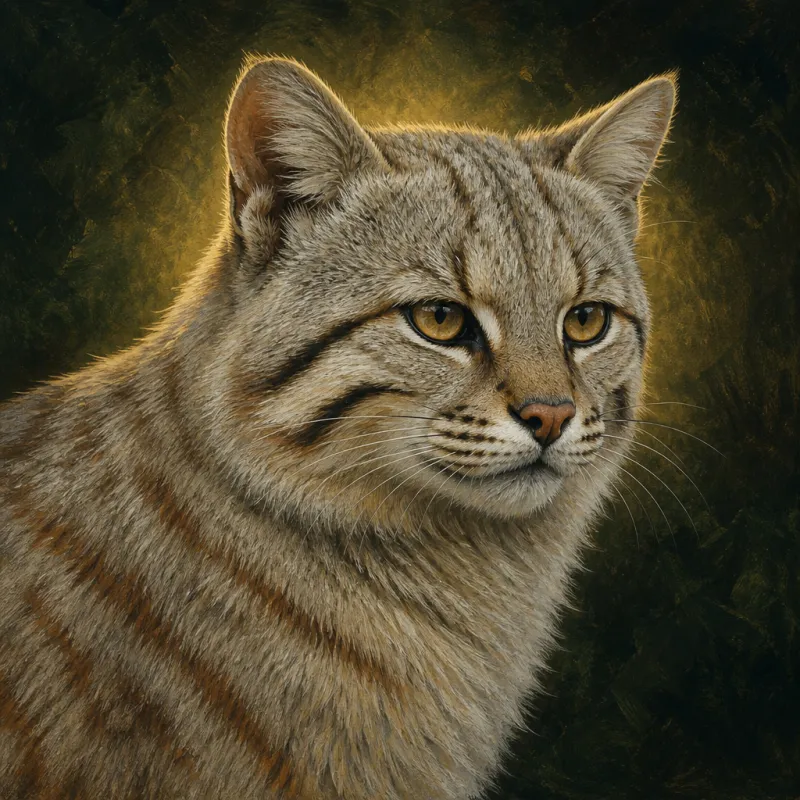
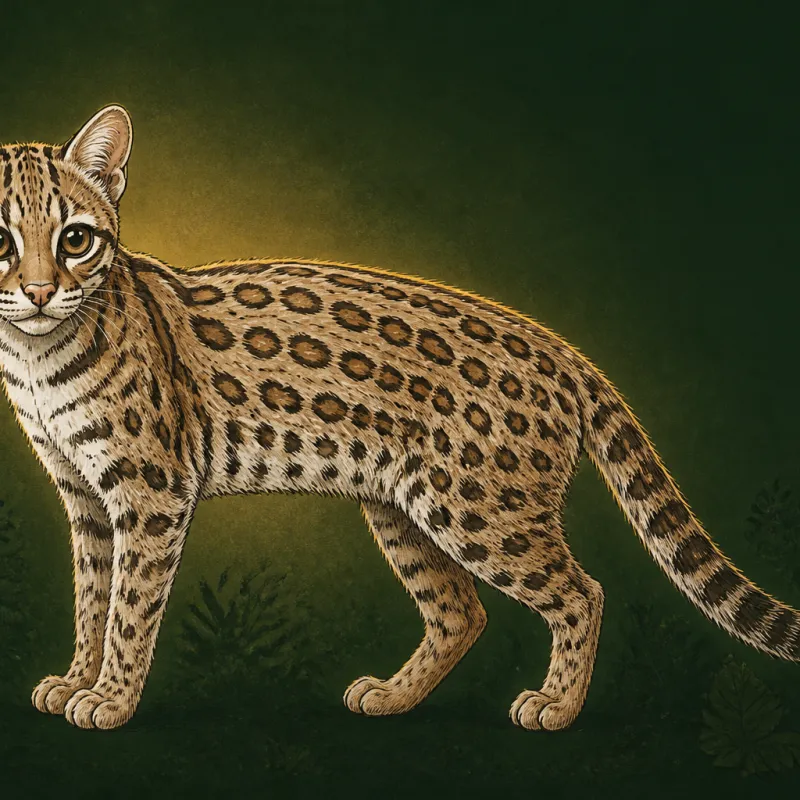
At a glance
- The pampas cat averages about 1.2 times the body mass of the northern tiger cat.
- Both species use dry forest.
- Their ranges both include South America.
- Red List categories differ: Pampas Cat is listed as Near Threatened, Northern Tiger Cat as Vulnerable.
Identification
How each species is named and classified.
Pampas Cat
Leopardus colocola
Northern Tiger Cat
Leopardus tigrinus
Pampas Cat
Leopardus
Northern Tiger Cat
Leopardus
Pampas Cat
Ocelot lineage
Northern Tiger Cat
Ocelot lineage
Pampas Cat
Small cats
Northern Tiger Cat
Small cats
Pampas Cat
Colocolo, Gato de los pajonales
Northern Tiger Cat
Oncilla, Little spotted cat
Body and movement
Published field measurements for adults. Ranges cover both sexes unless noted.
Pampas Cat
17 in – 2 ft 7 in (42–79 cm) Longer
Northern Tiger Cat
15 in – 23 in (38–59 cm)
Pampas Cat
9 in – 13 in (22–33 cm)
Northern Tiger Cat
8 in – 17 in (20–42 cm) Longer
Pampas Cat
12 in – 14 in (30–35 cm) Taller
Northern Tiger Cat
9 in – 12 in (22–30 cm)
Pampas Cat
4.4–8.8 lb (2–4 kg) Heavier
High-altitude animals tend to be larger and longer-coated.
Northern Tiger Cat
3.3–7.7 lb (1.5–3.5 kg)
Sexes are similar in size.
Pampas Cat
Not reliably measured
Not measured in the field.
Northern Tiger Cat
Not reliably measured
Not measured in the field.
Life span
Typical adult longevity. Figures for managed care come from zoo and sanctuary records.
Pampas Cat
9–12 years
Northern Tiger Cat
10–13 years Longer
Pampas Cat
12–16 years
Northern Tiger Cat
14–17 years Longer
Habitat and range
Where each species lives and the conditions it tolerates.
Pampas Cat
grassland, steppe, semi-arid scrub, dry forest, rocky alpine
Open habitats with cover at ground level: pampas grassland, Andean puna, Patagonian steppe, Chaco scrub and dry woodland.
Northern Tiger Cat
montane forest, cloud forest, dry forest, savanna
Montane and cloud forest from around 5,000 feet upward in the Andes and Central America, plus Cerrado woodland and dry Caatinga scrub in Brazil.
Pampas Cat
South America
From Ecuador and Colombia south through Peru, Bolivia, Brazil, Paraguay, Uruguay, Chile and Argentina to Patagonia.
Northern Tiger Cat
North America, South America
Costa Rica and Panama, through Colombia, Venezuela, Ecuador, Peru and the Guianas to central and north-eastern Brazil.
Diet and behaviour
Feeding ecology, social organisation and hunting technique.
Pampas Cat
small mammals, birds, reptiles
Small rodents, ground-nesting birds and their eggs, lizards and occasional invertebrates.
Northern Tiger Cat
small mammals, birds, reptiles, insects
Small rodents, marsupials, birds, lizards and invertebrates.
Pampas Cat
Solitary
Poorly known; observations are scattered and there are very few radio-tracking studies.
Northern Tiger Cat
Solitary
Rarely detected even in well-surveyed areas; density estimates are low wherever ocelots are common.
Pampas Cat
Nocturnal and crepuscular
Mostly active at night, with daytime records from high-altitude and cold environments.
Northern Tiger Cat
Nocturnal and crepuscular
Mostly night active, with more daytime records where ocelots are absent.
Pampas Cat
Ground search in tussock cover
Works methodically through grass and scrub, flushing and pouncing on rodents.
Northern Tiger Cat
Ground stalk in dense cover
Hunts small prey on the forest floor and in low vegetation.
Pampas Cat
Capable
Climbs when trees are available but is essentially terrestrial.
Northern Tiger Cat
Strong More developed
Climbs well, though it hunts mainly at ground level.
Pampas Cat
Very limited
No significant association with water.
Northern Tiger Cat
Very limited
Little recorded use of water.
Conservation
Red List category, population direction and the pressures documented for each species.
Pampas Cat
NT — Near Threatened
Assessed 2020
Northern Tiger Cat
VU — Vulnerable
Assessed 2016
Pampas Cat
Decreasing
Northern Tiger Cat
Decreasing
Pampas Cat
Grassland conversion to agriculture, Persecution near poultry, Dogs in rural landscapes, Road mortality, Unresolved taxonomy hampering targeted action
Conversion of native grassland to crops and pasture is the main pressure, alongside heavy fragmentation in the pampas and Chaco.
Northern Tiger Cat
Montane forest clearance, Cerrado conversion to agriculture, Road mortality, Killing near poultry, Competition and predation pressure from larger cats
Assessed as Vulnerable, with fragmentation of montane forest and conversion of Cerrado woodland driving decline. Population sizes are poorly known throughout the range.
Notable traits
Details that do not fit neatly into a measurement table.
Pampas Cat
- The coat can differ so much between populations that specimens were once split into several species.
- It occupies one of the widest altitude ranges of any American cat, from sea level to Andean puna.
- Field records remain so sparse that basic life-history data are still missing for many regions.
Northern Tiger Cat
- The species was split from the southern tiger cat on genetic evidence in 2013.
- Hybridisation with pampas cats and Geoffroy's cats has been documented at range boundaries.
- It is among the least frequently photographed cats in Neotropical camera-trap surveys.
Sources used for this comparison
- IUCN Red List of Threatened Species Global assessment categories, population trends and documented threats.
- IUCN SSC Cat Specialist Group Species accounts, distribution notes and Cat News reporting for every wild felid.
- Small Wild Cat Conservation Foundation Dedicated research and field reporting on the lesser-known felids.
- Animal Diversity Web, University of Michigan Museum of Zoology Reviewed species accounts with morphometric ranges and reproductive data.
- National Geographic — Animals General natural-history reference for behaviour, range and ecology.
- Wildlife Conservation Society Field programmes, camera-trap surveys and population monitoring.