Altitude and adaptation
Snow Leopard vs Leopard
Similar names and similar spots hide two very different animals: one a mountain specialist, the other the most adaptable large cat on the planet.
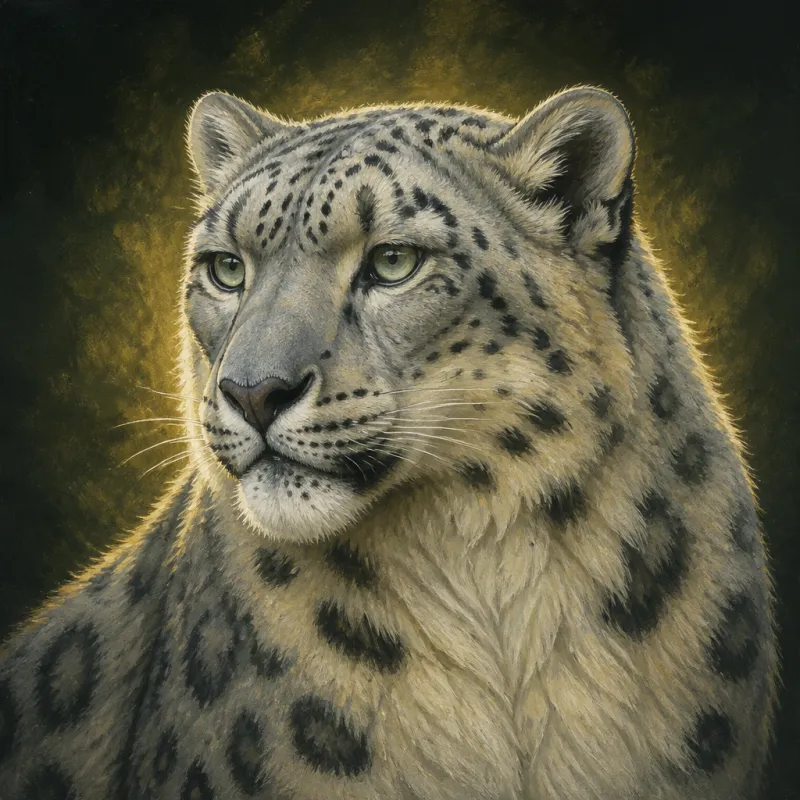
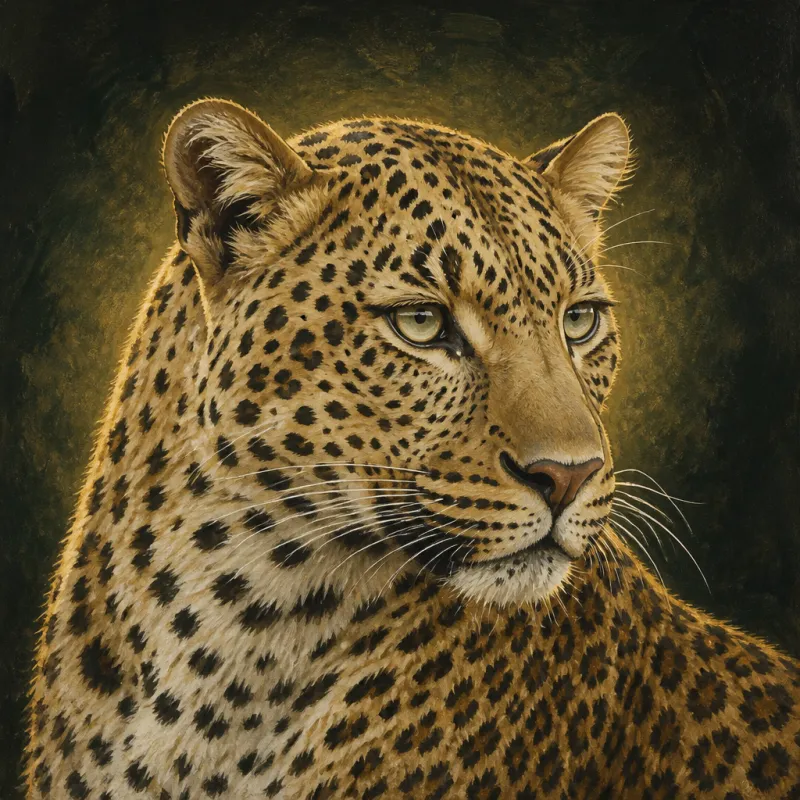
At a glance
- The leopard averages about 1.4 times the body mass of the snow leopard.
- Both species use montane forest.
- Their ranges both include Asia.
- Both are currently listed as Vulnerable on the Red List.
Built for cold and rock
The snow leopard's adaptations are unmistakable once listed together: enlarged nasal cavities that warm thin air, dense underfur, fur-covered paws that spread weight on snow, and a tail approaching ninety per cent of head-body length that acts as a counterweight on cliff faces.
Leopards carry none of these features. They rely instead on generalist anatomy — a build that works about as well in rainforest as on a mountainside — which is why the species occupies more habitat types than any other big cat.
Prey and terrain
Snow leopards depend on mountain ungulates, chiefly blue sheep and ibex, and hunt by ambushing from above on broken ground. Leopards eat almost anything, from beetles to antelope, and adjust their diet to whatever a landscape offers.
The two do overlap in parts of the Himalaya, where leopards occupy forested valleys and snow leopards the alpine zone above. Warming climates are shifting that boundary upward, which is one reason the interaction between the two species is now an active research question.
Voices
Both belong to Panthera, but only the leopard roars. The snow leopard lacks the specialised vocal anatomy and produces a drawn-out wail instead, alongside chuffing and growls.
What to take away
- The snow leopard is a narrow specialist; the leopard is the widest-ranging big cat.
- Their ranges meet in the Himalaya, separated by elevation rather than distance.
- Despite the shared genus, only the leopard can roar.
Identification
How each species is named and classified.
Snow Leopard
Panthera uncia
Leopard
Panthera pardus
Snow Leopard
Panthera
Leopard
Panthera
Snow Leopard
Panthera lineage
Leopard
Panthera lineage
Snow Leopard
Big cats
Leopard
Big cats
Snow Leopard
Ounce, Ghost of the mountains
Leopard
African leopard, Amur leopard, Arabian leopard
Body and movement
Published field measurements for adults. Ranges cover both sexes unless noted.
Snow Leopard
2 ft 10 in – 4 ft 1 in (86–125 cm)
Leopard
2 ft 11 in – 6 ft 3 in (90–190 cm) Longer
Snow Leopard
2 ft 7 in – 3 ft 5 in (80–105 cm) Longer
Leopard
23 in – 3 ft 7 in (58–110 cm)
Snow Leopard
22 in – 2 ft 2 in (55–65 cm)
Leopard
18 in – 2 ft 7 in (45–78 cm) Taller
Snow Leopard
49–121 lb (22–55 kg)
Males average roughly a third heavier than females.
Leopard
37–198 lb (17–90 kg) Heavier
Arabian leopards from about 17 kg; large African and Persian males approach 90 kg.
Snow Leopard
34 mph (55 km/h)
Rarely measured in the field; the species relies on terrain, not pursuit.
Leopard
36 mph (58 km/h) Faster
Measured over short distances; leopards depend on stalking to within a few strides.
Life span
Typical adult longevity. Figures for managed care come from zoo and sanctuary records.
Snow Leopard
10–12 years
Leopard
12–15 years Longer
Snow Leopard
18–22 years
Leopard
20–23 years Longer
Habitat and range
Where each species lives and the conditions it tolerates.
Snow Leopard
rocky alpine, montane forest, steppe
Broken cliff, ridgeline and alpine meadow, generally between 9,800 and 17,000 feet in the Himalaya, and considerably lower in the northern part of the range where treeline is lower.
Leopard
tropical rainforest, savanna, montane forest, semi-arid scrub, temperate forest, agricultural mosaic
From equatorial rainforest to the fringes of the Arabian and Kalahari deserts, and from sea level to above 15,000 feet in the Himalaya. Leopards persist in farmland and near cities where cover and small prey remain.
Snow Leopard
Asia
Twelve range countries across the Himalaya, Karakoram, Pamir, Tien Shan, Altai and Sayan mountains, including China, Mongolia, India, Nepal, Pakistan, Kyrgyzstan, Kazakhstan and Russia.
Leopard
Africa, Asia
Widespread but fragmented across sub-Saharan Africa, with relict populations in North Africa, Arabia, the Caucasus, Central and South Asia, South East Asia, China and the Russian Far East.
Diet and behaviour
Feeding ecology, social organisation and hunting technique.
Snow Leopard
medium ungulates, small mammals, birds
Blue sheep and Siberian ibex are the staples across most of the range, supplemented by argali, marmots, pikas, hares and gamebirds.
Leopard
medium ungulates, small mammals, primates, birds, reptiles
Extremely catholic: impala, bushbuck, duiker, hyrax, hares, monkeys, birds, rodents and, in some landscapes, domestic dogs and goats.
Snow Leopard
Solitary
Home ranges are very large, reflecting low prey density; individuals mark travel routes along ridgelines with scrapes and scent. Snow leopards cannot roar.
Leopard
Solitary and territorial
Adults maintain scent-marked ranges, with males overlapping several females. Leopards are notably tolerant of human presence when not persecuted, and often move unseen through settled country.
Snow Leopard
Crepuscular
Movement peaks at dawn and dusk, matching the activity of mountain ungulates, with resting sites chosen for a view over approach routes.
Leopard
Nocturnal and crepuscular
Predominantly night active, especially near people, though forest populations with low disturbance also hunt in daylight.
Snow Leopard
Ambush from above on broken ground
The cat uses cliffs and gullies to approach unseen, then charges downhill; leaps of several body lengths across rock are routine.
Leopard
Close stalk and pounce
Leopards use cover to approach within a few strides, then attack with a rush and a throat bite. Prey is often dragged to cover or hoisted into a tree.
Snow Leopard
Exceptional
Superb on rock and scree, using the long tail for balance on narrow ledges. Tree climbing is largely irrelevant in its habitat.
Leopard
Exceptional
Among the strongest climbers of all large cats; leopards regularly lift carcasses of their own body mass into the canopy.
Snow Leopard
Very limited
Rarely recorded in water; the species occupies cold, mostly frozen catchments where swimming offers no advantage.
Leopard
Capable More developed
Competent in water and willing to cross rivers, but far less aquatic than tigers or jaguars.
Conservation
Red List category, population direction and the pressures documented for each species.
Snow Leopard
VU — Vulnerable
Assessed 2017
Leopard
VU — Vulnerable
Assessed 2023
Snow Leopard
Decreasing
Leopard
Decreasing
Snow Leopard
Retaliatory killing after livestock loss, Poaching for pelts and bones, Prey depletion from competition with livestock, Mining and linear infrastructure, Climate-driven treeline shift
Reclassified from Endangered to Vulnerable in 2017 after improved survey data, though the assessment stressed that the change reflected better information rather than population recovery.
Leopard
Habitat fragmentation, Prey depletion, Retaliatory and preventative killing, Illegal skin and bone trade, Poorly regulated hunting
Widespread persistence disguises steep regional losses. Several subspecies — notably the Amur, Arabian, Javan and Sri Lankan leopards — survive as very small, isolated populations.
Notable traits
Details that do not fit neatly into a measurement table.
Snow Leopard
- Snow leopards lack the specialised vocal anatomy of roaring cats and instead produce a wailing call known as a "yowl".
- Their tails can measure close to ninety per cent of head-body length, proportionally the longest of any big cat.
- Camera-trap and genetic surveys still cover only a fraction of the species' vast, difficult range.
Leopard
- Leopard rosettes lack the interior spots typical of jaguars, the most reliable field distinction between the two.
- The Amur leopard, restricted to the Russian-Chinese border forests, is among the rarest big cats on Earth.
- Melanism occurs most often in humid forest populations of South and South East Asia.
Sources used for this comparison
- IUCN Red List of Threatened Species Global assessment categories, population trends and documented threats.
- IUCN SSC Cat Specialist Group Species accounts, distribution notes and Cat News reporting for every wild felid.
- Snow Leopard Trust Long-term ecological study of snow leopards and high-mountain prey systems.
- Panthera Field research programmes and species profiles for big and small wild cats.
- World Wildlife Fund Range descriptions, threat summaries and conservation programme reporting.
- Smithsonian's National Zoo and Conservation Biology Institute Body measurements, longevity records and life-history notes.