Species comparison
Jaguar vs Jaguarundi
A side-by-side look at Panthera onca and Herpailurus yagouaroundi across body measurements, habitat, diet, behaviour and conservation status.
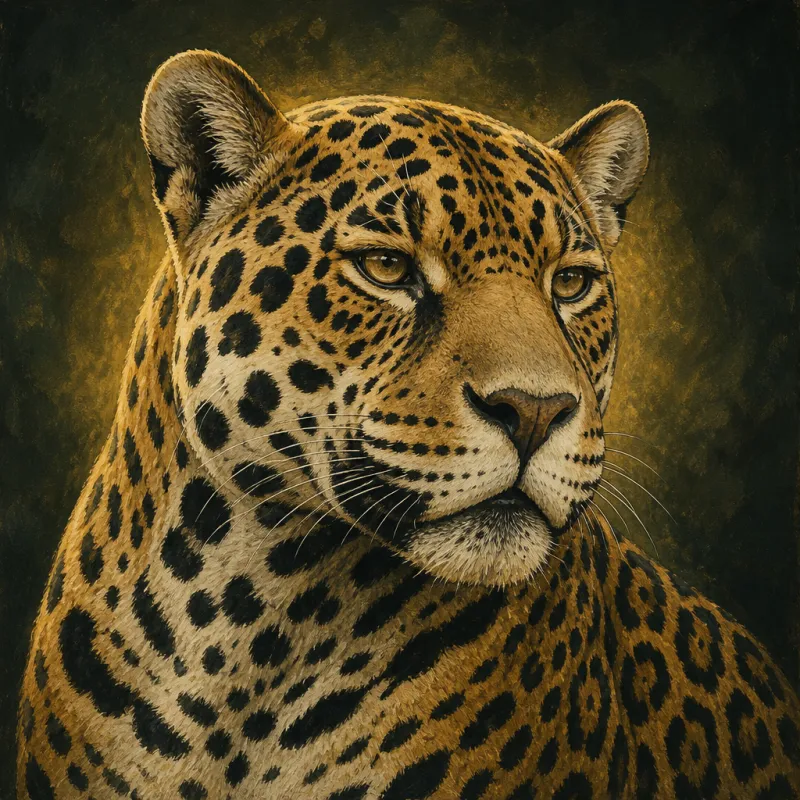
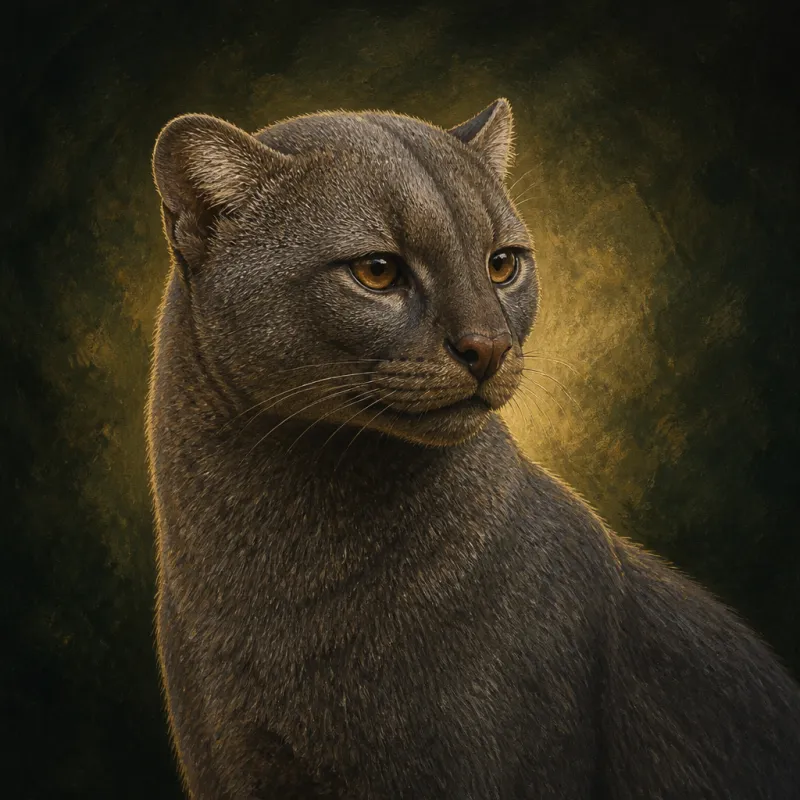
At a glance
- The jaguar averages about 13.2 times the body mass of the jaguarundi.
- Both species use tropical rainforest and wetland.
- Their ranges both include North America and South America.
- Red List categories differ: Jaguar is listed as Near Threatened, Jaguarundi as Least Concern.
Identification
How each species is named and classified.
Jaguar
Panthera onca
Jaguarundi
Herpailurus yagouaroundi
Jaguar
Panthera
Jaguarundi
Herpailurus
Jaguar
Panthera lineage
Jaguarundi
Puma lineage
Jaguar
Big cats
Jaguarundi
Small cats
Jaguar
El tigre, Onça-pintada
Jaguarundi
Eyra cat, Otter cat
Body and movement
Published field measurements for adults. Ranges cover both sexes unless noted.
Jaguar
3 ft 7 in – 6 ft 1 in (110–185 cm) Longer
Jaguarundi
21 in – 2 ft 6 in (53–77 cm)
Jaguar
18 in – 2 ft 6 in (45–75 cm) Longer
Jaguarundi
12 in – 24 in (31–60 cm)
Jaguar
2 ft 1 in – 2 ft 6 in (63–76 cm) Taller
Jaguarundi
10 in – 14 in (25–35 cm)
Jaguar
99–265 lb (45–120 kg) Heavier
Pantanal males are the heaviest; Central American animals are markedly smaller.
Jaguarundi
7.7–20 lb (3.5–9 kg)
Males average slightly larger than females.
Jaguar
50 mph (80 km/h)
Brief sprints only; jaguars are ambush hunters in dense cover.
Jaguarundi
Not reliably measured
No reliable measurement published.
Life span
Typical adult longevity. Figures for managed care come from zoo and sanctuary records.
Jaguar
12–15 years Longer
Jaguarundi
8–10 years
Jaguar
20–23 years Longer
Jaguarundi
10–15 years
Habitat and range
Where each species lives and the conditions it tolerates.
Jaguar
tropical rainforest, wetland, dry forest, mangrove, savanna
Strongly associated with water: floodplains, riverine forest, seasonally flooded grassland and swamp forest support the highest densities recorded for the species.
Jaguarundi
dry forest, tropical rainforest, semi-arid scrub, wetland, savanna, agricultural mosaic
Prefers dense low cover — thorn scrub, secondary growth, forest edge and riverside thickets — more often than closed primary rainforest.
Jaguar
North America, South America
From northern Mexico — with occasional records in Arizona and New Mexico — through Central America to northern Argentina. The Amazon basin and the Pantanal hold the largest remaining populations.
Jaguarundi
North America, South America
From northern Mexico through Central America to northern Argentina. Historical records exist for southern Texas, where the species is federally listed but has not been confirmed in decades.
Diet and behaviour
Feeding ecology, social organisation and hunting technique.
Jaguar
medium ungulates, reptiles, small mammals, fish
Capybara, peccary, caiman, giant anteater, armadillo, turtles and fish. More than eighty prey species have been recorded across the range.
Jaguarundi
small mammals, birds, reptiles, insects, fish
Rodents, ground birds, lizards, frogs, large invertebrates and occasional fruit; most prey weighs under a pound.
Jaguar
Solitary
Adults hold overlapping home ranges and communicate through scrapes, scent marking and a sawing call. Extended male associations have been documented in the Pantanal, which is unusual for the species.
Jaguarundi
Solitary
Usually seen alone, occasionally in pairs. It is more terrestrial than most Neotropical cats and moves through thick cover with a distinctly low, gliding gait.
Jaguar
Cathemeral, peaking at dawn and dusk
Activity shifts with prey and disturbance; jaguars in undisturbed wetlands often hunt in daylight, while those near settlements become largely nocturnal.
Jaguarundi
Diurnal
One of the few strongly day-active cats, with peaks in the morning and mid-afternoon. This may reduce competition with the largely nocturnal ocelot.
Jaguar
Ambush with a skull-piercing bite
Jaguars stalk close, often from water or dense vegetation, and frequently attack from above or behind. Caiman and turtles are killed with a direct bite through bone or shell.
Jaguarundi
Active ground search
Rather than sitting in ambush, jaguarundis quarter dense cover on foot, flushing and pouncing on small prey; they will also climb after birds.
Jaguar
Strong More developed
Confident climbers that rest and ambush from branches, though they cache prey on the ground far more often than leopards do.
Jaguarundi
Capable
Climbs well but hunts mainly on the ground, unlike the closely sympatric margay.
Jaguar
Exceptional More developed
Jaguars swim across major rivers, hunt in shallow water and have been filmed diving after caiman.
Jaguarundi
Capable
Enters water readily and has been observed swimming across small rivers.
Conservation
Red List category, population direction and the pressures documented for each species.
Jaguar
NT — Near Threatened
Assessed 2017
Jaguarundi
LC — Least Concern
Assessed 2015
Jaguar
Decreasing
Jaguarundi
Decreasing
Jaguar
Deforestation for pasture and soy, Retaliatory killing by ranchers, Trade in teeth and other parts, Prey depletion, Road and dam construction
Still widespread in Amazonia, but the species has been lost from roughly half its historical range, with severe fragmentation in Mexico, Central America, the Atlantic Forest and the Argentine Chaco.
Jaguarundi
Loss of dense low cover, Conversion of scrub to farmland, Road mortality, Persecution near poultry, Fragmentation of riparian corridors
Still widespread, but the northern edge of the range has contracted sharply and populations in Mexico and Central America are considered at risk.
Notable traits
Details that do not fit neatly into a measurement table.
Jaguar
- Melanistic jaguars — the so-called black panthers of the Americas — still carry rosettes, visible in raking light.
- The Pantanal supports some of the highest jaguar densities recorded anywhere, and its animals are the heaviest on average.
- Jaguars are one of the few cats known to prey routinely on large reptiles, including adult caiman.
Jaguarundi
- Grey and reddish colour morphs were once described as two separate species.
- It produces an unusually varied vocal repertoire, including chirps, whistles and a bird-like call.
- Its build reflects a diet of small ground prey, not the arboreal hunting typical of similarly sized Neotropical cats.
Sources used for this comparison
- IUCN Red List of Threatened Species Global assessment categories, population trends and documented threats.
- IUCN SSC Cat Specialist Group Species accounts, distribution notes and Cat News reporting for every wild felid.
- Panthera Field research programmes and species profiles for big and small wild cats.
- Wildlife Conservation Society Field programmes, camera-trap surveys and population monitoring.
- U.S. Fish and Wildlife Service Federal listing status and recovery planning for cats occurring in the United States.
- Small Wild Cat Conservation Foundation Dedicated research and field reporting on the lesser-known felids.
- Animal Diversity Web, University of Michigan Museum of Zoology Reviewed species accounts with morphometric ranges and reproductive data.